Have We Over-Simplified the Degree-to-Career Pipeline?

If you’ve studied English, Humanities, Arts or Social Sciences, I can almost guarantee that you’ve been asked this question at some time or another…
But what are you going to do with THAT?!
It’s a question which haunts students of these subjects - a question which freshly materialises in every family gathering, social occasion, and awkward chance encounter.
What’s the point of studying that though?
I don’t believe it’s said with malice. I think, much of the time, it’s genuine curiosity. After all, we’ve been spun a (very convincing) story that these subjects are unemployable and completely irrelevant to the current job market.
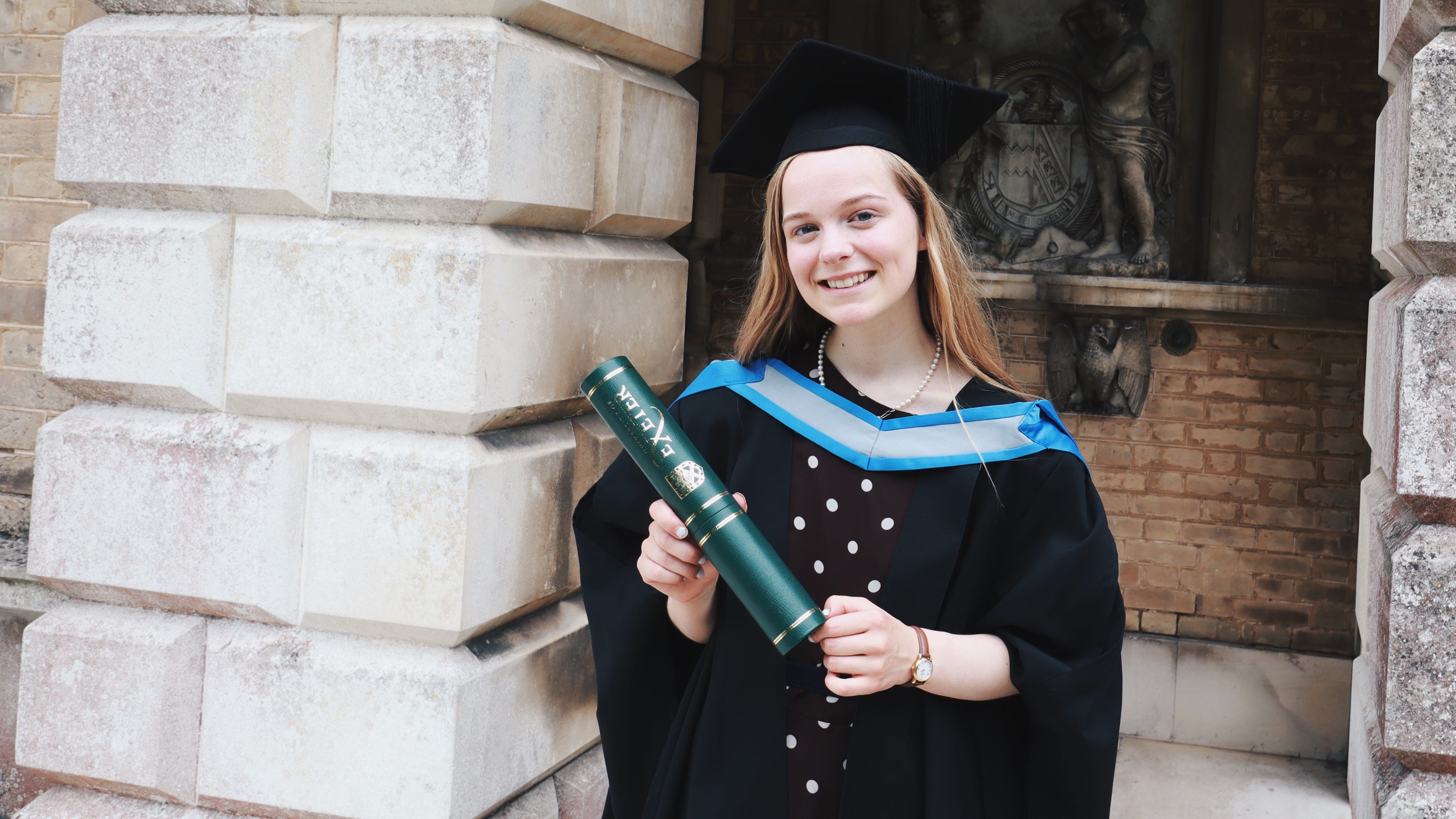
I studied English at university and, when I told people this, I would sometimes be met with a half-blank stare.
“So, you’re going to be an English teacher? Or go into Publishing?” people would often say.
It was even worse when I studied Theology. Back then, people assumed I was training to be a nun.
On the surface, this makes sense. We look at a degree subject, and try to think of a job which maps onto it directly. The popular narrative forgets that Humanities, Arts and Social Sciences are often not about content, but about methods of thinking.

The problem is that, when we think about degrees, we are thinking about them in terms of career paths. This is inevitable (and certainly not unimportant). Most people go to university to improve job prospects, after all.
And yet, we seem to have simplified this path - and yet we seem to forget that a university degree is not necessarily about being trained for a particular career. With Humanities, you become more employable because of the transferable thinking skills which you learn. You learn how to understand humans and how to think critically, two skills which are invaluable in the current job market. Indeed, George Anders, former Technology writer at Forbes, says that Silicon Valley is looking for these skills - for “social alchemists” - most of all (see his book You Can Do Anything: The Surprising Power of a Liberal Arts Degree).
Statistics from the British Academy show that Humanities degrees are just as employable as STEM degrees. They just don’t map onto clear career paths in the same way. The statistics from JISC show the same. Did you know that those with an English Literature degree have a lower unemployment rate 15 months after graduating than those with a Finance degree? It surprised me too.
So what is happening here?
George Anders says it is only the media who sees Humanities as unemployable and useless.
I’m wondering if this is yet another side-effect of this world of instant-gratification?
In a world dominated by instant-gratification, cause-and-effect is seen as something simple.
If you do this, this will happen.
It’s easy, it’s clear, and it’s intuitive.
In the job and university market, vocational degrees can feel much safer. They take out the fear of ‘not-knowing’ (not-knowing is one of the most terrifying things in the world). You do a Law degree and, within this narrative, you are more responsible. You have made a sensible decision. You are doing something which will get you a job at the end of it.
Of course, it’s not that simple. The graduate job market is broadly terrible (there is a 4.9% unemployment rate in the UK, with 700,000 graduates out of work) - and 7.1% of law graduates don’t have a job 15 months after graduating.
I don’t say this to put Law graduates on the spot - I use them as an example because it is one of the most clearly ‘employable’ and ‘sensible’ routes. Indeed, when asked, I used to say that I planned to eventually do a law conversion degree. This was always met with the comment - “how sensible! That’s a good idea!”.
The simplicity comes from having an answer to that question, perhaps. You make the degree choice and your career choice is also done-and-dusted. You no longer have to dear The Dreaded Question, and all of the ominous foreboding which this sparks.If you have chosen something ‘practical’ - a degree which directly relates to a particular career path - there is nothing to fear.
I recently did a deep-dive on Humanities cuts and the employability of these so-called ‘unemployable and useless degrees’, and I was pleasantly surprised at how wrong I was. I often think about the Humanities degree as unquantifiably valuable… but it’s also NOT financially useless.
Indeed, 8 of the 10 top industries in the UK before Covid employed a majority of Humanities and Social Science graduates…
That’s probably surprising. It surprised me because of just how different this narrative is to the one we hear in everyday conversation and in mainstream media coverage.
A final, and slightly unconnected thought… I wonder if these surprisingly-high employability rates are also something to do with motivation.
Intrinsic motivation always triumphs extrinsic motivation (see this YouTube video I made if you’re interested to learn more!).
When you do a Humanities degree - and when you do it DESPITE the prevailing narrative which says it’s not sensible - you have to become more aware of its value.
You must get used to answering that question: “why is it important?”
You being there is based in choice and interest and curiosity. It is not a stepping stone - it becomes something intrinsically valuable in itself.
And when you go all in with your learning, maybe you’re more likely to reap those benefits of studying Humanities? If you do a Humanities degree whole-heartedly, and let yourself learn how to think, you might just end up gaining the skills which employers say they are looking for.
Please sign the petition to protect English and Humanities at Exeter.
It only takes 20 seconds to sign!
(As always, this isn’t perfectly polished, but I just wanted to post!).
Slightly unrelated but possibly still relevant—I get the same questions when I tell people I am “studying” astrology, or quantum physics, or bioengineering, when I’m just a small (art-based) business owner with a teenage daughter and no desire to get into higher education at this point in life.
The questions are the same: what is the point? why are you wasting your time? don’t you have better things to do?
The response is equally exhausting when I tell someone I’d like to move to Japan and attend language school full time for a year. “Why? But you’re not a teenager? You’re so old.” First of all, ‘old’ is subjective. Secondly, And?
People tend to have a hard time grasping the concept of wanting to gain knowledge for the sake of personal interest and nothing else. Everything has to have a tangible, sensible reason that serves an obvious purpose in the modern world. Sometimes you just want to know the things to know the things! 🤭
I like to think that STEM builds the world, while the humanities make that world worth living in.